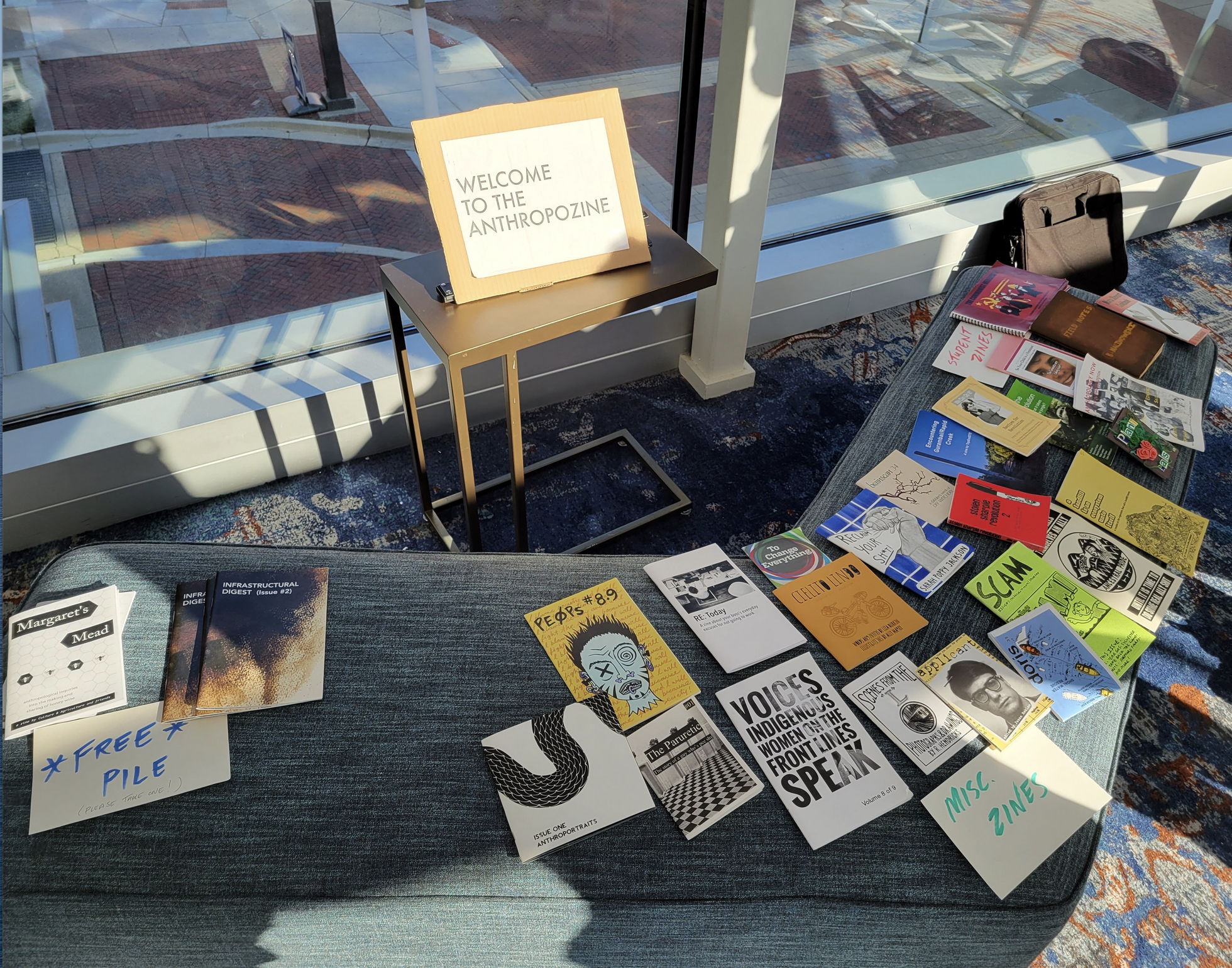
For those unfamiliar with zines, they are DIY magazines or fanzines. As a form, zines are wildly eclectic, but they rose in popularity particularly in punk music scenes as well as anarchist and queer literary circles. A few semesters ago, I began experimenting with the zine as an alternative form of anthropological knowledge production. Although peer-reviewed publications remain the gold standard for most academics, they are by design deeply exclusionary, particularly for undergraduates and early graduate students as well as scholars tackling stigmatized subjects (or just those who are pushing back against the scholarly status quo). I like teaching with zines because they allow students to develop exploratory essays, receive feedback, and then see their writing go out into the world. At the same time, they encourage experimentation with text and image, as well experiments in subject matter, voice, and literary form. And, because zines are self-published, authors exert greater control over the production and distribution of the information they want to share with the world.
During the AAA meeting in Baltimore, I put together this impromptu experiment in zine sharing (“Welcome to the Anthropozine”), which included zines from my personal collaborations, zines made by students, and other zines of broad anthropological interest. If you’re curious about (or already working on) ways of incorporating zines into your teaching or scholarly practice, please reach out – I’d love to hear from you.

 Nicholas C. Kawa